Contribution to Carbon Neutrality
Playing a pivotal role in the clean energy transition, the hydrogen economy significantly reduces carbon emissions. Aligned with our corporate vision, "Be Free with Nature," DR Fuel Cell actively contributes to achieving global carbon neutrality.
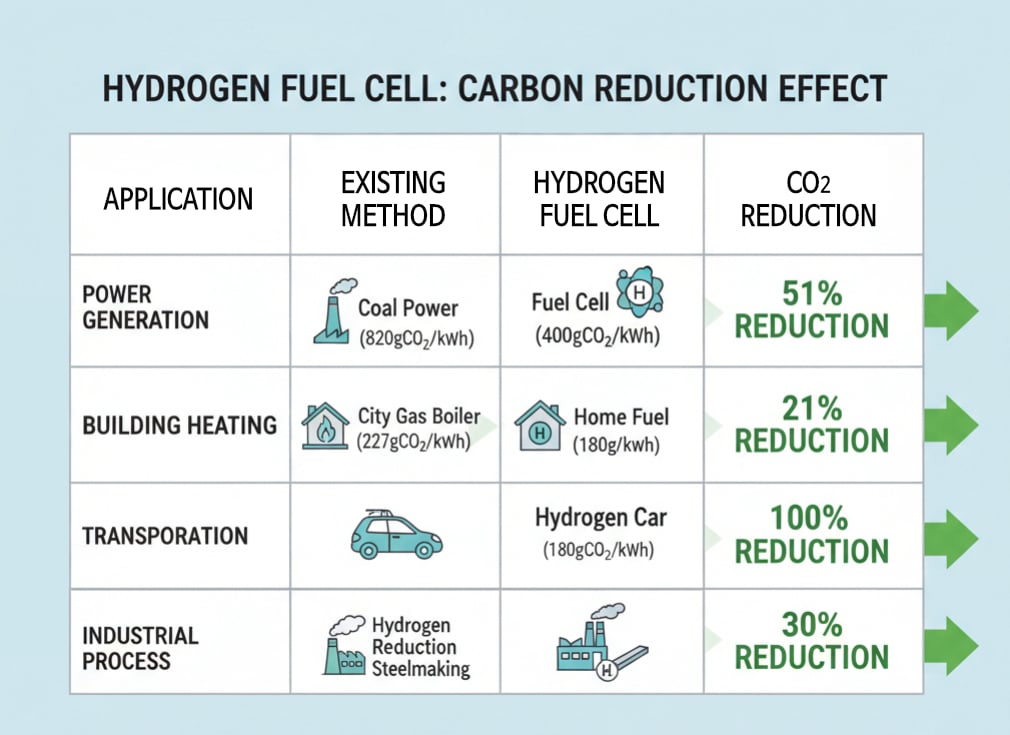
Power Generation: Replacing conventional coal-fired power generation (820gCO₂/kWh) with fuel cell generation (400gCO₂/kWh) reduces carbon emissions by 51%.
Building Heating: Using residential fuel cells (180gCO₂/kWh) instead of city gas boilers (227gCO₂/kWh) reduces carbon emissions by 21%.
Transportation: Replacing internal combustion engine vehicles (120gCO₂/km) with hydrogen electric vehicles (0gCO₂/km) eliminates carbon emissions by 100%.
Industrial Processes: Converting coke-based steelmaking to hydrogen reduction steelmaking offers an expected carbon reduction of 30%.
Implementing a Sustainable Circular Economy Model
The Core of the Circular Economy Model
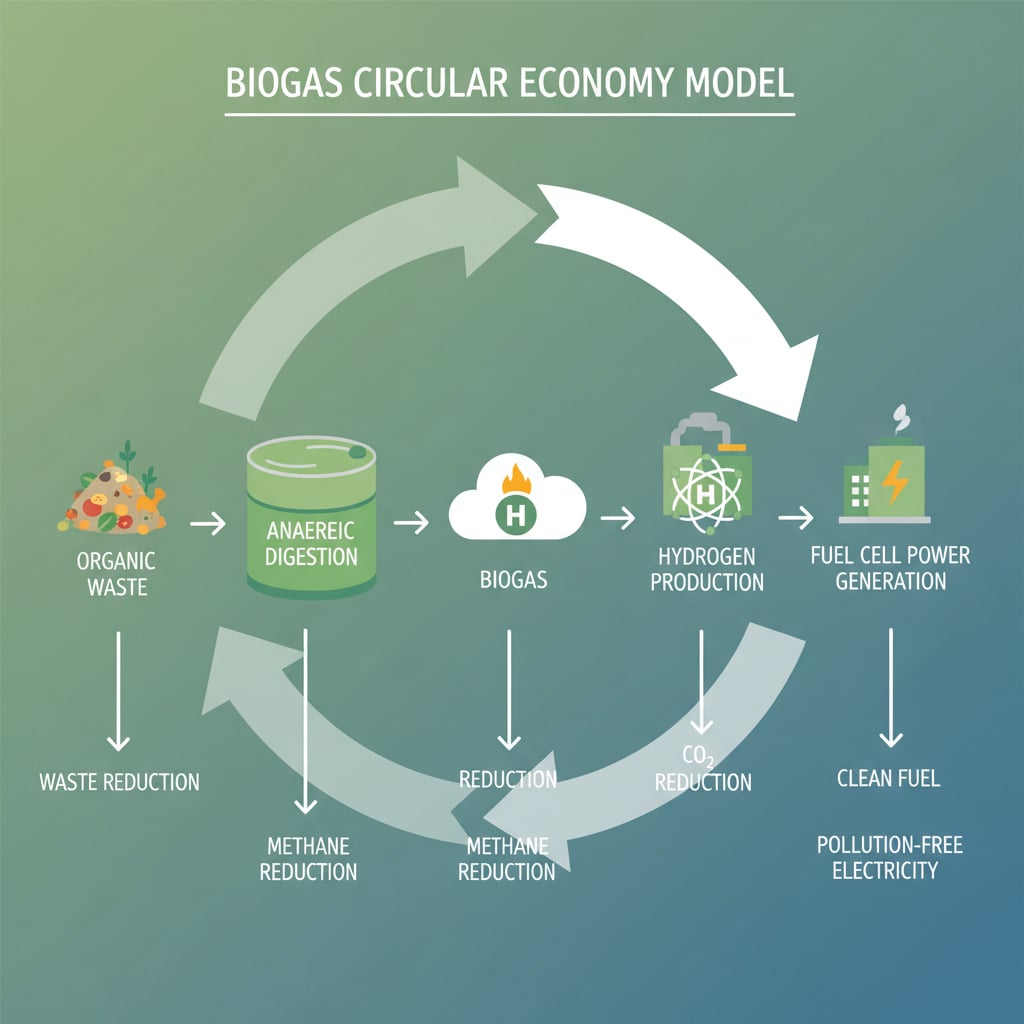
DR Fuel Cell's direct biogas reforming technology is the key driver of an innovative circular economy model that converts waste into energy. Beyond mere waste disposal, this technology simultaneously achieves the dual goals of environmental protection and high-value clean energy production. The cycle begins with the stable treatment and reduction of difficult-to-manage organic wastes, such as food waste, sewage sludge, and livestock manure.
Powerful Environmental Impact & Clean Energy Supply
The greatest environmental benefit of this model is the significant reduction of greenhouse gases. Methane (CH4), generated during the anaerobic digestion of organic waste, is a greenhouse gas approximately 21 times more potent than Carbon Dioxide (CO2). Our technology fundamentally blocks these methane emissions, thereby contributing significantly to the prevention of global warming.
The captured biogas is converted into 99.97% high-purity clean hydrogen through our direct reforming technology. This pollution-free energy serves as a key fuel for hydrogen vehicles and fuel cell power generation. Consequently, this process completes a sustainable energy loop: reducing waste and methane emissions while supplying clean hydrogen and zero-emission power. It is a futuristic model that fulfills environmental responsibilities while creating new economic value.
Eco-friendly Technology Development
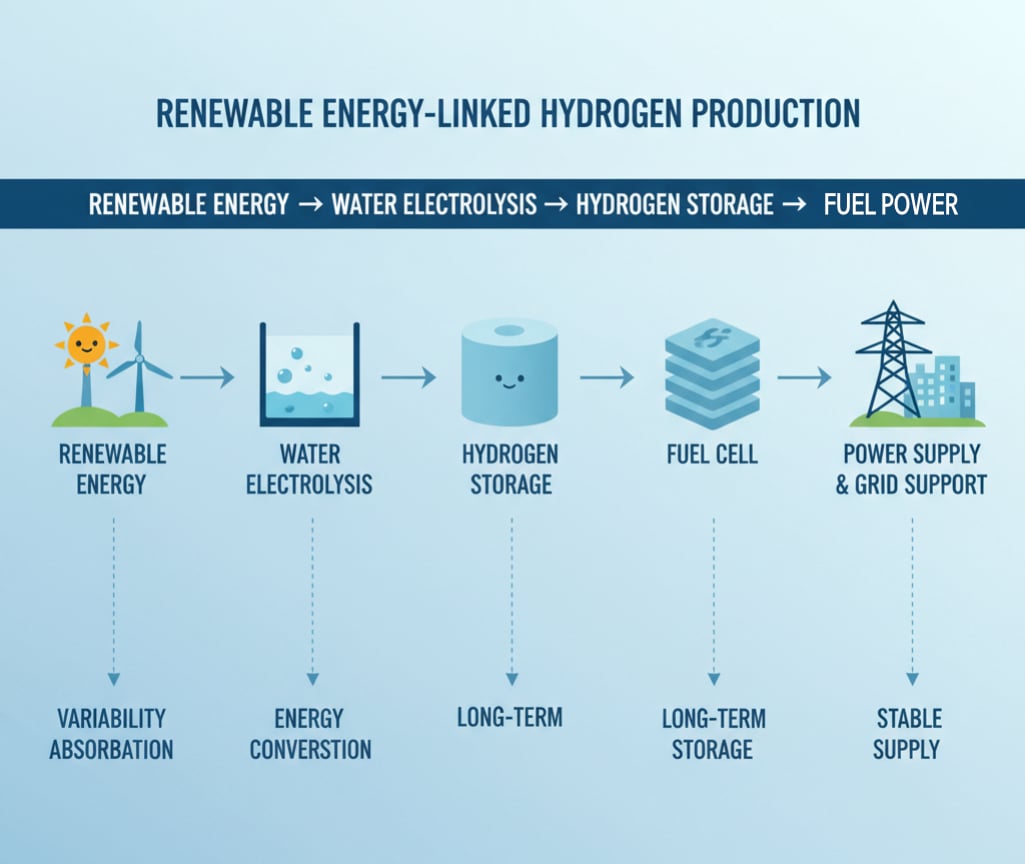
We are leading innovation in green energy technology through our renewable energy-integrated hydrogen production system. This system aims to overcome the limitations of intermittent renewable energy sources, achieving both a stable power supply and high-purity hydrogen production.
Establishment of Renewable Energy Integration Systems
We build flexible hybrid systems to effectively manage the volatility of renewable energy.
• Solar PV + Electrolysis: We utilize surplus solar power generated during the day to produce green hydrogen through water electrolysis. This reduces the burden on the power grid and prevents potential energy waste.
• Wind Power + Electrolysis: We produce hydrogen using power generated during strong winds or at night, ensuring continuous hydrogen production capabilities.
• Hydrogen + Fuel Cell: During periods with no wind or sunlight, stored hydrogen is fed into fuel cells to immediately generate and supply electricity, thereby maximizing system stability.